
It takes 6 to 8 months after the approval for a product to hit stores.

The USTR report, released just ahead of the US' April 2 deadline for implementing reciprocal tariffs, has also cited high tariffs and price caps, which have not increased in line with inflation, as key obstacles for US businesses.

With rising incomes, education, and health awareness in India, especially in the big cities, droves of people are saying no to sugar.
Food Safety and Standards Authority of India (FSSAI) has mandated to reduce the limit of industrially produced trans-fats, to not more than 2 per cent to make the country free from the industrially-produced trans-fats by 2022, a year-ahead of the WHO guidelines, the regulator said in a statement.

As controversy plagues foods again, brandification will bridge the trust deficit, critical for stakeholders.
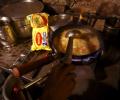
Nestle India currently exports Maggi noodles to Canada, UK, Singapore and Kenya and to third parties in the US, Australia and New Zealand

ITC has stated its products have been found to be in compliance with all food safety regulations.

On June 5, FSSAI banned Maggi noodles.

The court said a social media influencer is expected not to try to play the role of a professional without any backing to substantiate what is being shared by them.
The Maggi controversy is likely to be a stepping stone in the evolution of country's packaged and processed food industry.
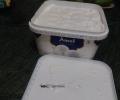
The Delhi high court has directed a Noida resident to remove her social media posts that alleged she found a centipede in a tub of Amul ice cream bought by her.

Health experts express concern about the unsupervised consumption of dietary supplements, warning poor-quality products can affect cardiovascular health and kidneys.

The state government had in the first week of June banned Maggi sale in the state after the product failed the food safety test.

India has expressed concern to the US authorities over the treatment of deportees on a flight that landed on February 5, particularly with respect to the use of shackles, especially on women. The Ministry of External Affairs (MEA) has also registered its concerns regarding the need to accommodate the religious sensitivities and food preferences of the deportees. The US side has confirmed that no women or children were restrained on the deportation flights that landed in India on 15th and 16th February, 2025.

She maintains the food company ignored her advice on various issues.
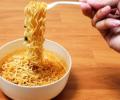
On August 13, Bombay High Court lifted the ban on nine variants of the fast food.

Nestle India said it has conducted over 3,500 tests.
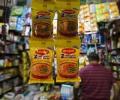
The high court had given the company six weeks for retesting.

In a statement, the state government alleged 'malicious attempts' to discourage the use of products lacking a halal certificate not only seek 'unfair financial benefits' but also form part of a 'pre-planned strategy to sow class hatred, create divisions in society, and weaken the country' by "anti-national elements".

The blast at The Rameshwaram Caf has caused distress and concern among the startup and information technology (IT) community, raising questions related to safety and security. Approximately 10 people were reportedly injured in a low-intensity bomb blast at The Rameshwaram Caf, a popular restaurant in Bengaluru's Brookfield. The surrounding area is a major hub for the Indian technology (tech) industry, housing many startups and top IT companies such as IBM, SAP, Accenture, International Tech Park Bangalore, and Prestige Technostar.
Ash content is now allowed up to 1%, the new notification has proposed to increase it to 2% for seasonings or tastemakers.
Maggi re-entered the market on November 9.

The preventive aspect of cancer is strengthened under comprehensive primary healthcare through the Ayushman Bharat Health and Wellness Centre scheme by the promotion of wellness activities and targeted communication at the community level.
Iron-rich noodles and vitamin-rich beverages are some products launched by segment majors
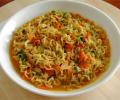
Maggi ban: SC orders fresh testing at Mysore lab.

Uttar Pradesh Food and Drug Authority (FDA) says it has found excess lead in the Yippee noodles of domestic giant ITC.
The development is significant for Nestle since arguments in the Bombay High Court over testing and sampling went in the company's favour, too.

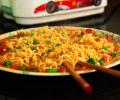
The trouble for Nestle's Maggi started in Uttar Pradesh last month and has now spread nationwide. The Food and Drug Administration has directed all states on Wednesday to get sample of India's most popular instant noodles tested for high content of lead and mono-sodium glutamate, a taste enhancer.
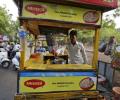
The labs have been asked to submit their report within six weeks.

The Supreme Court on Friday set up a five-member independent SIT to probe the allegations of animal fat used in preparing Tirupati laddus to "assuage the feelings of crores of people" while making clear that the court cannot be used as a "political battleground".

Patanjali Ayurved spokesman said, "Our present commercial is based on facts and research."
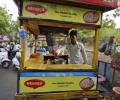
The SC bench said the report of CFTRI, where the samples of Maggi noodles were tested following earlier orders of the court, will form the basis for the proceedings before the NCDRC.

Patanjali, however, strongly denied FSSAI's claims and insisted that it has licence for Pasta, under which noodles falls, as per the regulator's classification.
This is second time in a month when a packaged food co has complained
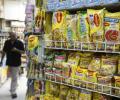
The watchdog says there were lapses in the tests
Nestle relaunched its instant noodles Maggi in the country after satisfying the conditions laid down by the High Court.

While FSSAI announced it would ban bromates in breads, it proposes to allow the very same in drinking water

FSSAI to remove potassium bromate from food additives list

Yoga guru Baba Ramdev on Saturday put up a brave face, saying it has not flouted any FSSAI norms.
